A government dental plan can make treatment more affordable. However, one misunderstanding about coverage could still leave you with a bill you were not expecting. That possibility should not stop you from seeking care. It simply means you should ask the right questions before treatment begins. The Canadian Dental Care Plan, commonly called the CDCP, is helping eligible residents receive dental care when they do not have access to private dental insurance. For families, adults and seniors in Brampton, the program may reduce the cost of checkups, cleanings, fillings and several other necessary services.
However, the CDCP does not always pay the entire dental bill.
If you are looking for a dentist in Brampton who can help you understand your treatment options, this guide explains what the plan may cover, what you may need to pay and how to prepare for your appointment.
What Is the Canadian Dental Care Plan (CDCP)?
The Canadian Dental Care Plan is a federal program created to make oral healthcare more affordable for eligible Canadian residents.
It is not a free dental program in every situation. It helps pay part or all of the CDCP-established fee for eligible services. The amount paid depends partly on your adjusted family net income and the type of treatment you require.
Applications are currently open for the 2026–2027 benefit year, which runs from July 1, 2026, to June 30, 2027.
Coverage must be renewed each year. Patients who missed the previous renewal period may submit a new application, although a temporary gap in coverage may occur.
Who Is Eligible for CDCP in Brampton?
Living in Brampton does not automatically make someone eligible. Applicants must meet all four federal requirements.
You may qualify when:
- You do not have access to private dental insurance.
- You and your spouse or common-law partner, when applicable, have filed the required Canadian tax returns.
- Your adjusted family net income is below $90,000.
- You are a Canadian resident for tax purposes.
Access to private coverage may include insurance offered through an employer, pension plan, family member, professional group or student organization.
You may be considered to have access even when you chose not to enrol, have never used the plan or must pay a premium for it.
This detail can be easy to overlook. Check box 45 on your T4 or box 015 on your T4A before confirming that you do not have access to dental benefits.
Government dental programs are treated differently. People receiving coverage through certain federal, provincial or territorial social programs may still qualify for the CDCP. The programs may coordinate their benefits to avoid duplicate payments.
Does the CDCP Mean Your Dental Visit Will Be Free?
Not necessarily.
Some patients have a 0% co-payment based on their income. However, even these patients may have an additional amount to pay if the dentist’s regular fee is higher than the amount recognized by the CDCP.
The current co-payment levels are:
| Adjusted family net income | CDCP portion of its established fee | Patient co-payment |
|---|---|---|
| Below $70,000 | 100% | 0% |
| $70,000–$79,999 | 60% | 40% |
| $80,000–$89,999 | 40% | 60% |
These percentages apply to the CDCP-established fees. They do not necessarily represent the full fee charged by a dental clinic.
You may therefore need to pay:
- Your required co-payment
- The difference between the clinic’s fee and the CDCP-established fee
- The full cost of services the CDCP does not cover
- Treatment performed before your coverage becomes active
The Government of Canada advises patients to ask about uncovered costs before agreeing to treatment.
An affordable dentist in Brampton should be willing to explain the estimated charges clearly. Do not feel uncomfortable asking for a written treatment estimate.
What Dental Services Can the CDCP Cover?
The CDCP may help pay for a broad range of medically necessary oral healthcare services when recommended by a dental professional.
Exams and preventive care
Possible services include:
- Complete and routine dental examinations
- Emergency or problem-specific examinations
- Dental X-rays
- Scaling and professional cleaning
- Fluoride applications
- Dental sealants
These services can help identify small problems before they become more uncomfortable or expensive.
A tiny cavity may not hurt at first. Gum disease can also develop with few obvious symptoms.
Regular examinations allow a dentist in Brampton to check areas that are difficult to assess at home.
Fillings and basic restorative care
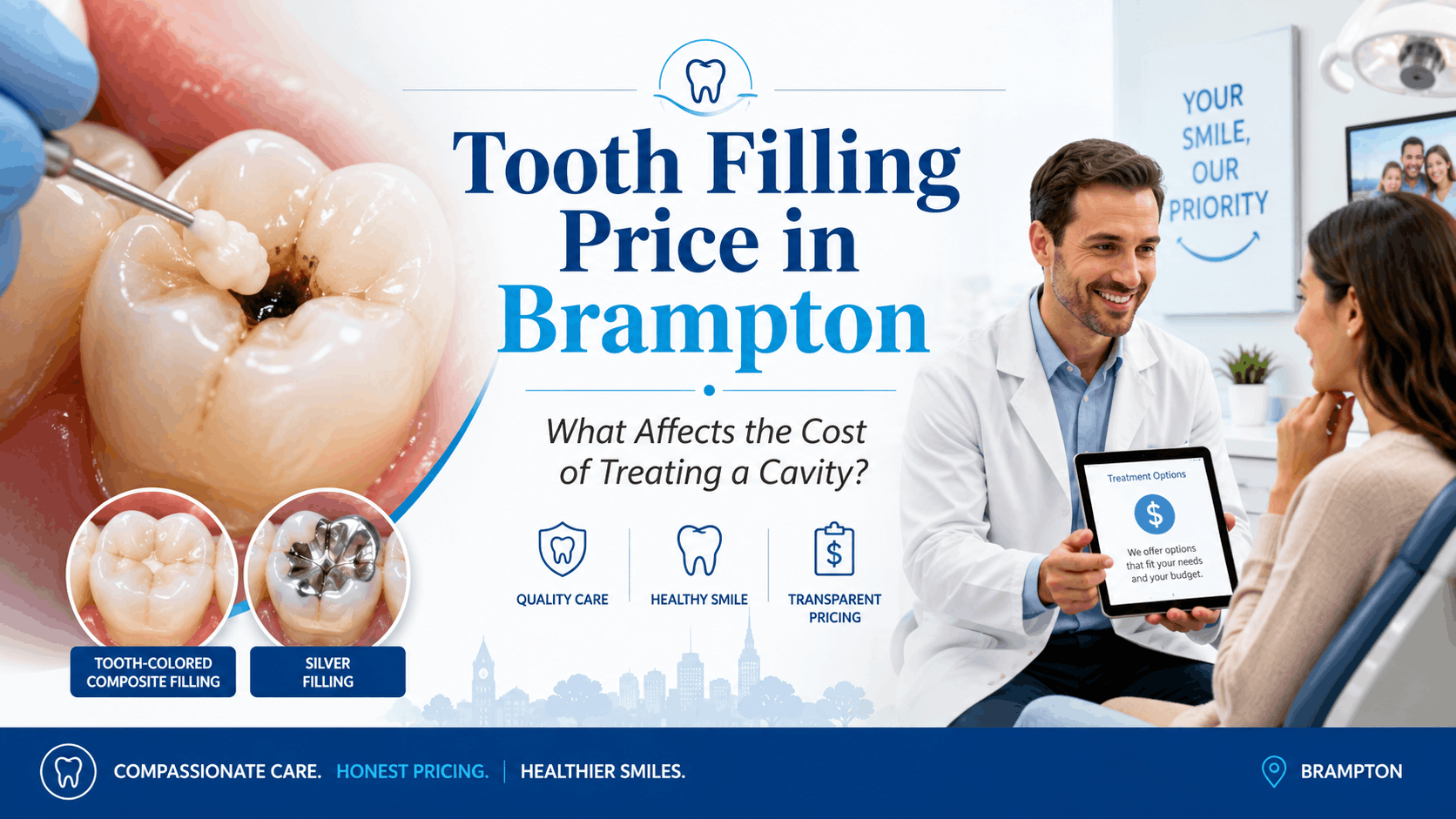
The plan may cover permanent or temporary fillings, pain control for diseased teeth and certain other treatments for cavities.
Coverage does not mean every filling material or cosmetic option will be included.
Ask whether the recommended restoration is eligible and whether an alternative would create a different cost.
Root canal treatment
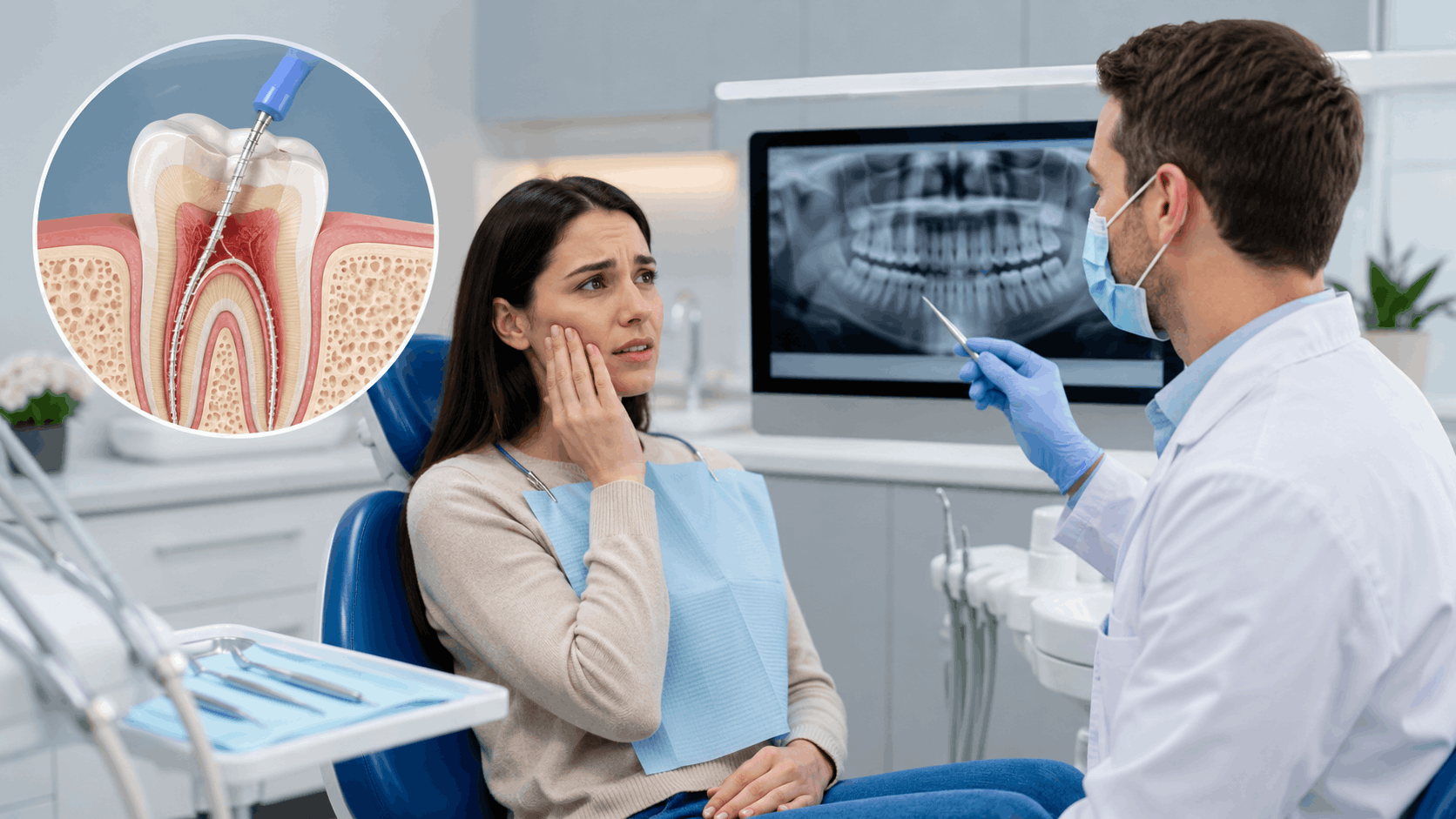
Root canal treatment may be covered when a tooth is badly decayed, infected or damaged.
Certain related procedures can also qualify. However, repeating a previously completed root canal generally requires preauthorization.
If you need a root canal dentist in Brampton, the tooth should first be examined.
The dentist can determine whether the tooth may be saved, whether a crown may later be needed and which parts of the treatment require approval.
Gum treatment
The CDCP may help cover:
- Cleaning below the gumline
- Treatment of dental abscesses
- Nonsurgical gum disease management
- Certain procedures for loose teeth
- Some post-surgical evaluations
Some periodontal services require preauthorization.
Bleeding gums should not automatically cause alarm. They may result from brushing too firmly or temporary irritation.
However, persistent bleeding, swelling, bad breath or gum tenderness should be evaluated because these may be signs of gum disease.
Crowns and major restorative treatment
Certain crown-related services may be eligible, but crowns and bridges in Brampton, cores and some supporting procedures like restorative dentistry normally require preauthorization.
A recommendation for a crown does not guarantee that the CDCP will approve it. The clinic may need to submit X-rays, clinical findings and supporting information before treatment begins.
Dentures
The program may cover certain complete dentures, temporary dentures, denture repairs, relines and rebases.
Partial dentures, immediate dentures and overdentures may require approval before treatment.
Tooth extractions and oral surgery
Covered services may include the removal of teeth or roots, drainage procedures and certain other medically necessary oral surgeries.
Coverage depends on the procedure and the patient’s clinical needs. A consultation is usually needed before the exact treatment and expected cost can be confirmed.
Which Services Are Not Automatically Covered?
Several common misunderstandings can lead to surprise costs.
The CDCP does not automatically cover:
- Every service recommended by a dentist
- Treatment performed before your coverage start date
- Services beyond the plan’s frequency limits
- Procedures that require approval but have not been authorized
- Treatments chosen mainly for cosmetic reasons
- Fees above the amount recognized by the plan
Orthodontic services are also not available under the CDCP yet. The Government of Canada states that a limited range of orthodontic services will be introduced at a future date. That date has not been confirmed.
Patients should therefore not assume that braces or clear aligners will currently be covered.
What Does Preauthorization Mean?
Preauthorization means the dental clinic must request approval before providing certain services.
The dentist may need to submit:
- X-rays
- Dental charts
- Photographs
- Medical information
- A clinical explanation
- A proposed treatment plan
The CDCP then reviews whether the service meets its coverage criteria. Approval is not guaranteed. It may also take time.
This is why a dentist may examine your tooth but schedule the final treatment for a later date. The delay does not necessarily mean the clinic is refusing care. It may mean the team is waiting for a coverage decision.
You may choose to proceed without approval, but you could become responsible for the full cost if the request is denied.
What to Ask Before Booking a CDCP Appointment
Before choosing a dentist in Brampton, ask the clinic:
- Are you currently accepting new CDCP patients?
- Can you verify when my coverage begins?
- Is the examination or treatment eligible under the CDCP?
- Does the service require preauthorization?
- Will I have a co-payment?
- Could there be a difference between the clinic fee and the CDCP fee?
- Can I receive a written estimate before treatment?
- What happens if the CDCP does not approve the recommended service?
These questions are especially helpful for patients travelling from Bramalea, Heart Lake, Springdale, Downtown Brampton or other parts of Peel Region.
Confirming the details before leaving home can save time and reduce uncertainty. So, find a CDCP dentist in Brampton, ON.
What Should You Bring to Your Appointment?
Bring your:
- CDCP member information
- Government-issued identification
- List of medications
- Relevant medical history
- Previous dental X-rays, when available
- Information about other government dental benefits
Tell the clinic if your coverage, address or insurance access has recently changed.
A dental office cannot decide whether you qualify for the CDCP. Eligibility is determined through the federal application process.
The clinic can, however, help you understand how your approved coverage relates to a proposed dental treatment.
Do Not Wait for Pain Before Visiting a Dentist
Concerns about cost can cause people to postpone dental visits. That reaction is understandable.
Unfortunately, dental problems rarely become simpler when they are ignored.
A small cavity may eventually reach the nerve. Mild gum inflammation may progress into deeper gum disease. A cracked tooth may weaken further and become difficult to restore.
This does not mean every minor symptom is an emergency. It means an early examination often gives you more treatment choices.
Contact a dental professional promptly if you experience:
- Facial swelling
- Severe or increasing tooth pain
- Fever with a dental problem
- Pus or a bad-tasting discharge
- Uncontrolled bleeding
- Difficulty swallowing or breathing
- Dental trauma
Difficulty breathing, significant facial swelling or rapidly spreading infection may require urgent medical attention.
Choosing a Dentist in Brampton for CDCP Care
Coverage is only one part of the decision. A good dentist in Brampton should also take time to:
- Examine the cause of your concern
- Explain treatment options in simple language
- Separate urgent care from optional care
- Discuss fees before beginning treatment
- Tell you when preauthorization is needed
- Answer questions without making you feel rushed
This patient-first approach is especially important for seniors, families with children, newcomers and people returning to dental care after several years.
Brampton dentistry should feel understandable and respectful. You should know why a procedure is recommended, what alternatives exist and what you may need to pay.
Speak With SmileMakers Dental in Brampton
SmileMakers Dental Care provides comprehensive dental services from its office at 36 Vodden Street East, Suite 105, Brampton, Ontario. The practice is led by Dr. Seema Shetty, who has more than 20 years of dental experience and has served patients at SmileMakers since 2013.
When booking, tell the team that you have CDCP coverage. They can review the treatment being considered, explain whether preauthorization may be required and discuss possible patient costs before care begins.
Do not let uncertainty about the CDCP prevent you from having a painful or damaged tooth examined.
Contact SmileMakers Dental at 905-457-0778 to book an appointment with a dentist in Brampton and receive guidance based on your individual oral health needs.
Frequently Asked Questions
Is the Canadian Dental Care Plan the same as private dental insurance?
No. The CDCP is a federal benefit program. It has its own eligibility conditions, established fees, service limits and preauthorization requirements.
Can a dental clinic apply for the CDCP for me?
No. Patients must apply through the Government of Canada. A trusted person may help with the application when proper consent or legal authority is provided. Applications for the 2026–2027 benefit year are currently open.
Will I pay nothing if my co-payment is 0%?
Not always. The CDCP may cover 100% of its established fee while the dental clinic charges a different amount. You may need to pay the difference or the cost of any service that is not covered.
Does the CDCP cover root canals?
Certain root canal treatments may be covered when clinically necessary. Re-treatment of a previously treated tooth generally requires preauthorization.
Are braces or Invisalign covered by the CDCP?
Not at present. Orthodontic coverage is expected to become available for a limited range of services in the future, but no implementation date has been announced.
Do I need to renew my CDCP coverage?
Yes. CDCP coverage must be renewed annually. Each benefit period ends on June 30. Missing the renewal period can create a gap in coverage, and care received during that gap is not reimbursed retroactively.
Can I use the CDCP for a dental emergency?
Emergency examinations and certain treatments for pain or infection may be eligible. Coverage depends on your active benefit dates, the service performed and the CDCP rules. Contact the dental clinic before your visit whenever possible.
This article provides general educational information and reflects publicly available CDCP information as of July 2026. Coverage rules may change. Confirm your eligibility and benefits with the Government of Canada and discuss treatment-specific costs with your dental provider.