
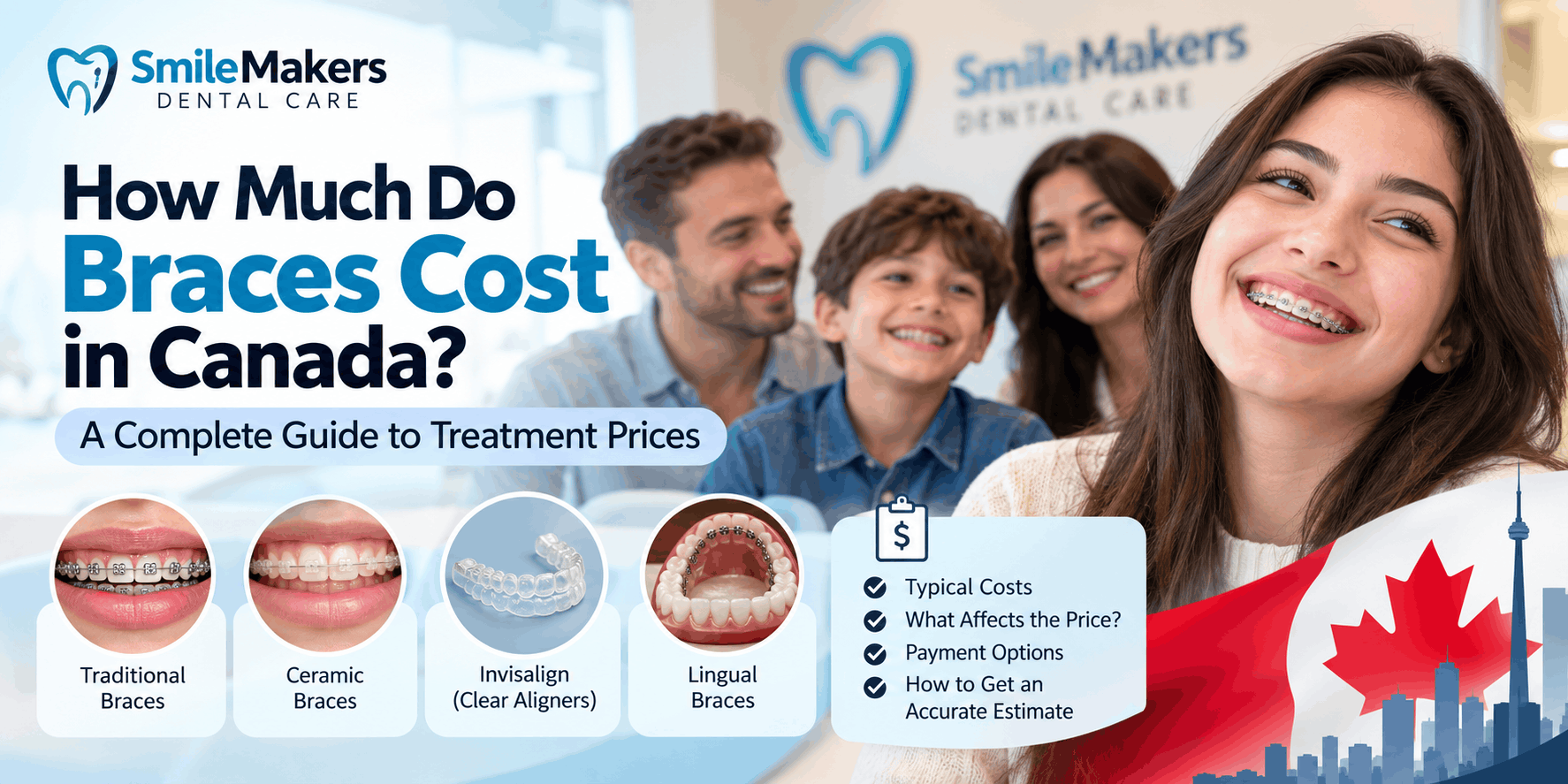
A straighter smile can make everyday moments feel different. You may feel more comfortable smiling in photos, speaking with confidence, or meeting new people. For children, orthodontic treatment can also help address developing bite problems. However, before starting treatment, many families have one important question: How much do braces cost in Canada?
The answer depends on more than the type of braces you choose. Your dental health, bite alignment, treatment duration, and individual needs all influence the final price.
Whether you are considering dental braces for your child, exploring teeth braces for adults, or helping an older family member understand their options, knowing what affects the cost can help you plan ahead.
This guide explains the typical braces cost in Canada, compares common orthodontic treatments, explores payment options, and shows you how to request an accurate estimate before committing to treatment.
How Much Do Braces Cost in Canada?
The cost of braces in Canada can vary considerably. As a broad planning estimate, comprehensive orthodontic treatment may range from approximately $3,000 to $10,000 or more, depending on the appliance, complexity of the case, location, and treatment plan.
These figures are general estimates, not a guaranteed price list for every Canadian clinic. Your personalized quote may fall outside this range.
Several factors determine the final fee:
- Type of treatment: Traditional metal braces, ceramic braces, lingual braces, and clear aligners have different features and requirements.
- Treatment complexity: Minor tooth crowding may require a different approach from a complex bite problem.
- Treatment duration: Longer or more involved treatment can affect the overall fee.
- Additional procedures: Some patients need fillings, extractions, or other dental treatment before orthodontic care begins.
- Follow-up care: Adjustments, retainers, and replacement appliances may affect the total cost.
- Location and provider: Fees and available treatment options can differ between clinics and regions.
When researching the braces price in Canada, compare complete treatment plans rather than looking at the starting price alone. A written estimate should explain what is included, what may cost extra, and how payments are arranged.
What Types of Dental Braces Are Available?
The right orthodontic treatment depends on your teeth, bite, dental health, lifestyle, and preferences. An assessment helps determine which options are suitable.
1. Traditional Metal Braces
Traditional metal braces use small metal brackets attached to the teeth and connected by an orthodontic wire.
The wire applies controlled pressure to gradually move teeth into their planned positions.
Metal braces remain a widely used option for children, teenagers, and adults. They can address many orthodontic problems, including crowded teeth, spacing, and different types of bite misalignment.
What makes them useful?
- They are fixed in place throughout treatment.
- They can address a broad range of orthodontic concerns.
- They do not depend on the patient remembering to wear removable trays.
- The orthodontic team can make adjustments as treatment progresses.
Patients need to follow instructions about food, brushing, flossing, and regular appointments. Sticky or hard foods can damage brackets or wires, so dietary guidance is important.
2. Ceramic Braces
Ceramic braces work in a similar way to traditional metal braces, but their brackets are tooth-coloured or relatively discreet. This makes them appealing to patients who want a less noticeable fixed appliance.
They may be considered by older teenagers and adults who prefer a subtle appearance while receiving orthodontic treatment.
However, ceramic brackets can be more fragile than metal ones. Patients must maintain good oral hygiene and follow their clinician’s instructions to protect the appliance.
Ceramic braces are not automatically the best option for every patient. Their suitability depends on the required tooth movements, bite condition, and treatment goals.
3. Lingual Braces
Lingual braces are attached to the inner surfaces of the teeth, facing the tongue. Because the brackets sit behind the teeth, they are less visible when a person smiles.
Some patients choose lingual braces because appearance is a major concern. However, these appliances require specialized planning and may take time to get used to.
Possible considerations include:
- Temporary tongue irritation or speech changes.
- More challenging cleaning around the brackets.
- The need for a clinician experienced in this treatment method.
- Suitability for the patient’s specific bite and tooth alignment.
Lingual braces are not ideal for every orthodontic case. A professional assessment helps determine whether they can achieve the desired result.
4. Clear Aligners
Clear aligners use a series of removable, transparent trays to move teeth gradually. Patients typically switch trays according to their treatment plan and attend scheduled progress checks.
Clear aligners may suit people who want a discreet option and the flexibility to remove their appliance for eating, brushing, and flossing.
Their success depends heavily on consistent wear. Removing the trays too often or wearing them for less time than instructed can delay progress.
Clear aligners can treat many alignment concerns, but they are not appropriate for every complex bite problem. A dentist or orthodontist must assess whether they are suitable for your needs.
5. Self-Ligating Braces
Self-ligating braces use a built-in clip or mechanism to hold the orthodontic wire, rather than the small elastic ties used with many conventional braces.
They may be available with metal or ceramic brackets. Their design changes how the wire is held, but it does not guarantee faster treatment or fewer appointments for every patient.
Your clinician should explain whether this system offers a meaningful advantage for your specific case.
How Do You Choose the Right Type?
The best option is not necessarily the least visible or most technologically advanced appliance.
It is the treatment that can safely and predictably address your dental needs.
| Treatment option | Main feature | Important consideration |
|---|---|---|
| Metal braces | Fixed brackets and wires | Visible appliance; requires careful cleaning |
| Ceramic braces | Tooth-coloured brackets | More discreet, but brackets may be more fragile |
| Lingual braces | Brackets behind the teeth | Requires adaptation and specialized planning |
| Clear aligners | Removable transparent trays | Requires consistent wear and suitable case selection |
| Self-ligating braces | Built-in wire-holding mechanism | Benefits depend on the individual treatment plan |
When comparing orthodontists and braces, ask about the provider’s qualifications, the proposed treatment method, expected progress checks, and how complications will be managed.
What Factors Affect the Cost of Braces?
Understanding these factors can help you make sense of different estimates and avoid unexpected expenses.
1. The Complexity of Your Dental Needs
The degree of crowding, spacing, and bite misalignment can influence the treatment plan.
Some cases involve straightforward tooth movements, while others require more detailed planning or additional appliances.
The clinician may need to evaluate how your upper and lower teeth fit together, the position of your jaw, and whether any teeth are impacted.
2. The Type of Appliance
Different orthodontic systems involve different materials, laboratory work, planning, and clinical techniques.
For example, lingual braces require placement behind the teeth, while clear aligners involve a series of custom-made trays.
The most appropriate choice should be based on clinical suitability, not appearance alone.
3. Treatment Length
Orthodontic treatment often takes many months and can extend over several years, depending on the case.
The duration depends on the planned tooth movements, how your teeth respond, and whether you follow the treatment instructions.
Missed appointments, broken appliances, or inconsistent aligner wear can delay progress.
4. Preparatory Dental Treatment
Some patients need other dental care before braces can be fitted. This may include treating cavities, addressing gum problems, or evaluating teeth that may need extraction.
Ask whether these procedures are included in the orthodontic estimate or billed separately.
5. Retainers and Aftercare
Completing active treatment is not the final step. Teeth can gradually shift after braces are removed, so retainers are usually recommended to help maintain the result.
Confirm whether the estimate includes the initial retainers, follow-up visits, and any applicable replacement policy.
Are Braces Different for Children, Teenagers, Adults, and Seniors?
Orthodontic treatment is not limited to teenagers.
People of different ages may benefit from an assessment, although their needs can differ.
Braces for Children
An orthodontic evaluation can help identify developing bite issues, crowding, or problems with the eruption of permanent teeth.
Not every child needs braces immediately. Some children benefit from monitoring their dental development, while others may need early treatment to address a specific concern.
Parents should ask about the purpose of treatment, the recommended timing, and whether a second phase of treatment may be needed later.
Braces for Teenagers
Teenagers often begin orthodontic treatment as their permanent teeth emerge. Their treatment may address spacing, crowding, and bite alignment.
The best approach depends on their dental development and the problem being treated.
Parents and teenagers should discuss oral hygiene, food restrictions, appointment schedules, and how to protect the appliance during sports.
Teeth Braces for Adults
It is possible to improve tooth alignment during adulthood. Adults may consider conventional braces, ceramic braces, lingual braces, or clear aligners, depending on their clinical needs.
However, adults may have existing restorations, gum concerns, tooth wear, or other dental conditions that need attention before treatment.
A proper assessment helps determine whether the teeth and supporting tissues are healthy enough for orthodontic treatment and which approach is appropriate.
Orthodontic Treatment for Seniors
Age alone does not automatically rule out orthodontic treatment. Some older adults may be candidates for treatment to address tooth movement, spacing, or bite concerns.
The clinician must consider gum health, bone support, missing teeth, existing crowns or implants, and general oral health. Orthodontic treatment also needs careful coordination when other dental procedures are planned.
The goal is to develop a safe, realistic treatment plan that reflects the person’s health, comfort, and priorities.
Does Dental Insurance Cover Braces in Canada?
Some private dental insurance plans include orthodontic benefits, but coverage varies. A plan may cover only a percentage of eligible treatment costs and may impose a lifetime maximum, age restrictions, waiting periods, or other conditions.
Before beginning treatment, contact your insurance provider and ask:
- Does my plan include orthodontic coverage?
- Is coverage available for both adults and children?
- What percentage of eligible expenses is covered?
- Is there a lifetime maximum or waiting period?
- Are there restrictions on the type of treatment?
- Does the insurer require pre-authorization?
Request a written estimate or pre-determination when available. Remember that an insurer’s estimate is not always a guarantee of final payment.
The Canadian Dental Care Plan (CDCP) currently lists orthodontic services as unavailable. Check the official CDCP coverage information for the latest rules before assuming braces will be covered.
How Can You Make Braces More Affordable?
If the expected treatment fee feels difficult to manage, ask the clinic about payment arrangements before starting.
Ask About Monthly Payment Plans
Some dental practices offer structured payment plans that divide the treatment fee into instalments. Ask whether a deposit is required, when payments begin, and whether interest or administrative fees apply.
For example, a clinic may arrange for a portion of the treatment fee to be paid initially, with the remaining balance divided into agreed monthly payments. The terms will depend on the provider.
Understand Your Insurance Benefits
If you have orthodontic coverage, ask the clinic whether it can submit an estimate to your insurer. Confirm the eligible amount, any annual or lifetime limits, and your expected out-of-pocket share.
Read more on how to bypass denied dental insurance problem and appeal successfully.
Compare Complete Treatment Plans
If you seek a second opinion, compare the recommended treatment, provider qualifications, included appointments, retainer policy, and possible extra charges.
A lower initial quote may not include the same services as another clinic’s estimate.
Ask About the Full Cost Before Treatment
Request a written breakdown that explains the treatment fee, diagnostic records, adjustment visits, retainers, repairs, and any procedures that may be charged separately.
Knowing the financial commitment in advance makes it easier to plan and ask questions before treatment begins.
How to Request an Accurate Braces Estimate
An online price range can help you prepare, but it cannot replace an individual assessment. To receive a useful estimate, follow these steps:
- Book an orthodontic assessment. The clinician can examine your teeth, bite, and oral health.
- Discuss your goals. Explain whether your main concern is crowding, spacing, bite alignment, appearance, or another issue.
- Ask which treatments are suitable. Request an explanation of the advantages and limitations of the recommended options.
- Review the proposed plan. Ask about the expected duration, appointments, and any preparatory dental work.
- Request an itemized estimate. Confirm what is included and which additional expenses may arise.
- Check insurance and payment terms. Obtain confirmation from your insurer and ask the clinic about available payment arrangements.
These steps help you compare options fairly and understand what you are paying for before making a decision.
Frequently Asked Questions About Braces Cost in Canada
1. How much do braces cost in Canada?
Comprehensive orthodontic treatment can range from approximately $3,000 to $10,000 or more, depending on the type of appliance, complexity of the case, treatment duration, and clinic. These are general planning estimates, not a personalized quote. An examination and written treatment plan provide a more accurate figure.
2. What is the average braces price in Canada for metal braces?
Traditional metal braces are commonly considered a standard fixed orthodontic option. Actual fees vary between clinics and cases. Ask whether the quoted price includes diagnostic records, adjustments, retainers, and follow-up care before comparing estimates.
3. Are teeth braces for adults effective?
Yes, adults can benefit from orthodontic treatment when their teeth and supporting tissues are suitable. The appropriate method depends on tooth alignment, bite concerns, gum health, existing restorations, and treatment goals. A clinical assessment is needed to determine which options are suitable.
4. Are clear aligners better than traditional dental braces?
Neither option is best for everyone. Clear aligners are removable and discreet, while traditional braces remain fixed and can address a broad range of orthodontic concerns. The best choice depends on the complexity of the case, your dental health, and your ability to follow the treatment instructions.
5. Does the Canadian Dental Care Plan cover braces?
The CDCP’s current coverage information states that orthodontic services are not available. Since government program rules can change, check the official CDCP coverage page for current information. Private insurance may have separate orthodontic benefits and restrictions.
6. What should I ask an orthodontist before starting treatment?
Ask which treatment options suit your needs, how long treatment may take, what the total fee includes, whether retainers and follow-up appointments are included, and what additional expenses may arise. Also ask about payment plans, insurance documentation, and what happens if an appliance breaks or treatment takes longer than expected.
Take the First Step Toward a Straighter Smile
Choosing braces is an important decision for your smile, comfort, and long-term oral health. Understanding the treatment options and the factors that affect the total fee can help you make a more confident choice.
Whether you are exploring braces for your child, considering orthodontic treatment as an adult, or helping a senior family member review their options, start with a professional assessment and a clear treatment plan.
Ready to explore your options? Book a free consultation with SmileMakers Dental Care to discuss your smile goals, ask questions about suitable orthodontic treatments, and learn about the next steps toward your treatment plan.