
Your gums can get sore fast. One day everything feels normal. The next day your mouth feels tender, puffy, and irritated every time you eat, brush, or even smile.
The good news is this: sore gums do not always mean something serious.
Sometimes the cause is simple. You brushed too hard. Food got stuck. Your gums got irritated after flossing. A new toothbrush, braces, or even stress can make your mouth feel off for a while.
But sometimes sore gums are your body waving a red flag.
That is why it helps to know two things:
how to get quick relief now, and how to tell when it is time to see a dentist.
If you have been searching how to relieve sore gum, this guide will walk you through it in plain English.
Why do gums get sore in the first place?
Sore gums usually happen because the tissue is irritated or inflamed.
That irritation can come from a few common causes:
- Plaque buildup along the gumline
- Brushing too hard
- Food trapped between teeth
- Flossing too aggressively
- Canker sores or mouth irritation
- Hormonal changes
- Dry mouth
- Smoking or vaping
- Gum infection or early gum disease
- A cracked tooth or dental abscess nearby
According to the CDC, warning signs of gum disease can include red, swollen, or tender gums, bleeding gums, painful chewing, and gums that pull away from the teeth.
That matters because sometimes “sore gums” are not just irritation. They may be the early stage of a bigger dental problem.
How to relieve sore gum at home
Let’s start with the part you care about most.
How do you feel better today?
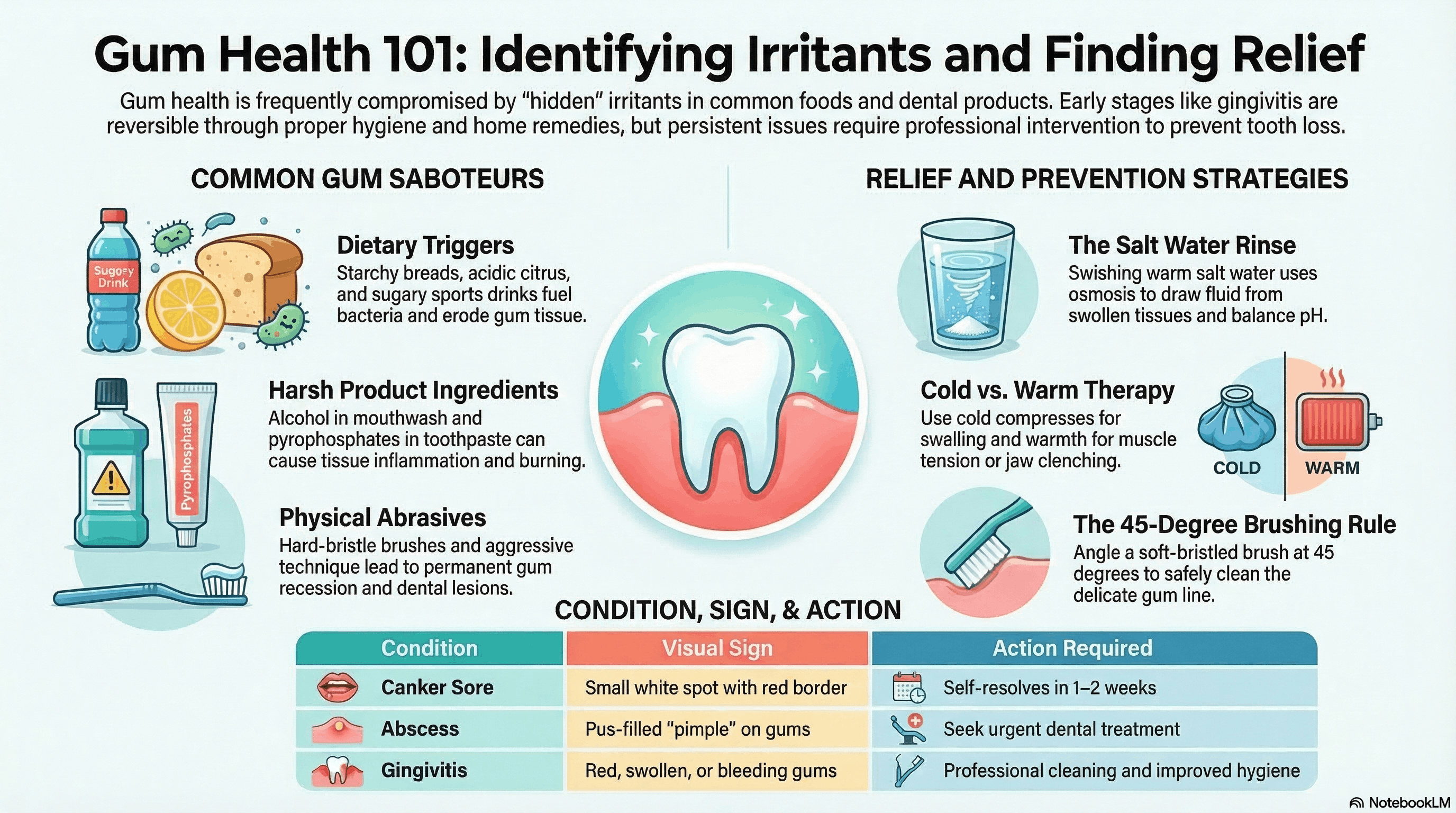
Here are simple things you can do at home for quick relief.
1) Rinse with warm salt water
This is one of the easiest home remedies.
Mix about half a teaspoon of salt in a glass of warm water. Swish gently for 20 to 30 seconds. Then spit it out.
Salt water can help soothe irritated tissue and keep the mouth cleaner while the area settles down.
Do this a few times through the day if needed.
2) Brush gently, not aggressively
A lot of people think sore gums mean they should avoid brushing.
Usually, that is the wrong move.
You still want to keep the area clean. Just be gentle.
Use a soft-bristled toothbrush. Brush in small circles. Do not scrub back and forth like you are cleaning tile grout.
If your toothbrush feels stiff, it may be part of the problem.
3) Floss carefully
If something is stuck between your teeth, it can make your gums sore very quickly.
Careful flossing can help remove trapped food and plaque. But do not snap the floss hard into the gums. That can make the soreness worse.
Be slow. Be light. Be patient.
4) Avoid spicy, crunchy, or acidic foods for a day or two
When your gums are already irritated, the wrong foods can keep poking the fire.
Try to avoid:
- Chips
- Hard toast
- Citrus
- Spicy foods
- Very hot drinks
- Alcohol-heavy mouthwashes
Go with softer foods instead. Think yogurt, soup, eggs, oatmeal, smoothies, or rice.
5) Use a cold compress on the outside of your cheek
If your gums feel swollen, a cold compress may help.
Wrap an ice pack or cold cloth and place it on the outside of your cheek for short periods.
Do not put ice directly on your gums.
This can help calm swelling and make the area feel less angry.
6) Stay hydrated
A dry mouth can make gum irritation feel worse.
Drink more water through the day. A moist mouth is generally a healthier mouth.
Saliva helps wash away food particles and bacteria. When your mouth gets dry, irritation can stick around longer.
7) Watch your brushing products
Sometimes the problem is not your gums alone. It is what you are putting on them.
A harsh toothpaste, strong whitening product, or alcohol-based rinse can irritate tender tissue.
If your gums started hurting after changing products, switch back to something gentle and simple for now.
8) Give the area a little time
Minor gum irritation can calm down in a day or two.
If the soreness is already improving, that is a good sign.
But if it lingers, gets worse, or starts coming with swelling, bleeding, bad breath, or tooth pain, it is time to stop guessing.
What sore gums can feel like
Sore gums do not always feel the same.
Some people notice:
- Tenderness when brushing
- Swelling near one tooth
- A dull ache along the gumline
- Bleeding when flossing
- A stinging feeling when eating something salty or acidic
- Red or puffy tissue
- A bad taste in the mouth
- Pain while chewing
If this sounds familiar, do not panic.
But do pay attention.
Your mouth usually gives clues before a problem gets bigger.
When sore gums are likely not an emergency
In many cases, sore gums may come from short-term irritation.
That can include:
- Starting flossing again after a long break
- Brushing too hard
- A small cut from sharp food
- Mild irritation from braces or aligners
- Hormonal gum sensitivity
These situations often improve with gentle home care.
Still, you should keep an eye on the area.
If things are not clearly improving, let a dentist take a look.
Signs you need a dentist
This is the part many people ignore for too long.
They hope the soreness will just disappear.
Sometimes it does.
Sometimes it does not.
The NHS advises seeing a dentist if your gums bleed when you brush or eat hard foods, if your gums are painful and swollen, or if you have bad breath. Urgent dental attention is advised if gums become very sore and swollen, teeth become loose, or you notice ulcers, red patches, or a lump in the mouth.
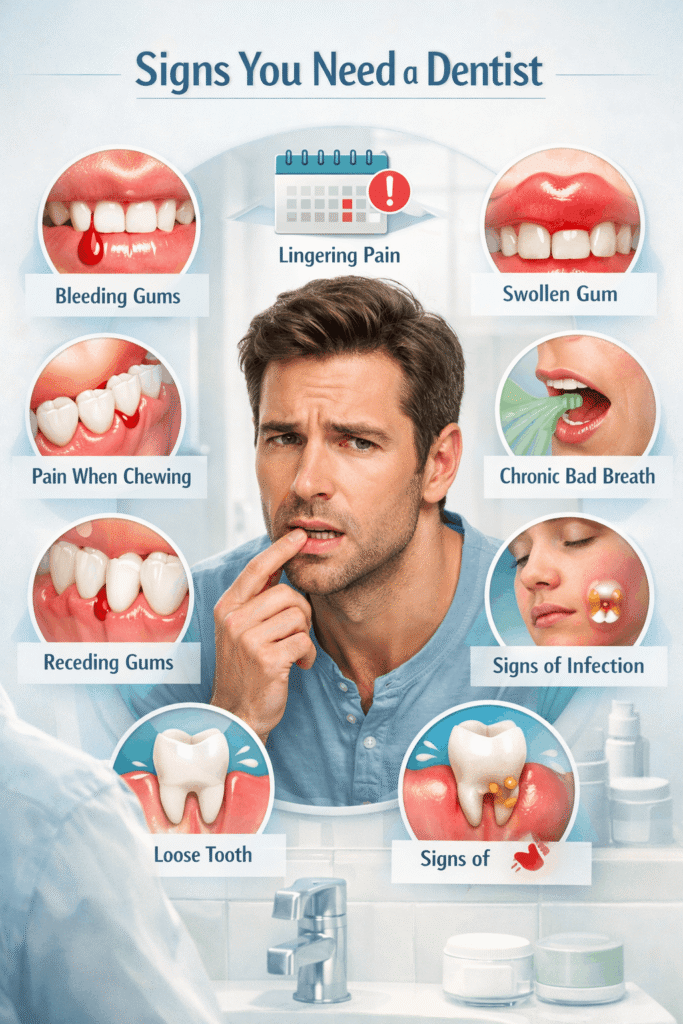
Here are the signs that sore gums should be professionally checked.
1) Your gums bleed often
A little irritation after flossing once is one thing.
Frequent bleeding is another.
Healthy gums should not bleed regularly.
If they do, plaque buildup or gum disease may be part of the picture.
2) The soreness lasts more than a few days
Minor irritation should settle.
If your gums still hurt after several days, or the pain keeps returning, something deeper may be going on.
3) One area is swollen or throbbing
Pain in one spot can mean trapped food, a gum infection, or a tooth problem nearby.
If swelling is focused in one area, get it checked.
4) You have bad breath that will not go away
Persistent bad breath is not always just about food.
It can be linked to plaque, gum infection, or bacteria under the gumline.
5) It hurts to chew
Pain while chewing can point to inflamed gums, a cracked tooth, or infection around a tooth.
That is not something to ignore.
6) Your gums are pulling away from your teeth
Receding gums can be a sign of gum disease, aggressive brushing, or other oral health issues.
This is worth catching early.
7) Your tooth feels loose or different
A loose tooth is never a “wait and see” issue.
That needs prompt attention.
8) You notice pus, a bad taste, or facial swelling
These can be signs of infection.
That means it is time to call a dentist as soon as possible.
Can sore gums mean gum disease?
Yes, they can.
Not always, but yes.
Gingivitis, the early stage of gum disease, often starts with redness, tenderness, swelling, and bleeding. The good news is that gingivitis is often reversible when treated early and paired with better daily care.
That is why early action matters.
The earlier you deal with gum inflammation, the easier it usually is to manage.
What your dentist may do
If you visit a dentist for sore gums, the appointment is usually very straightforward.
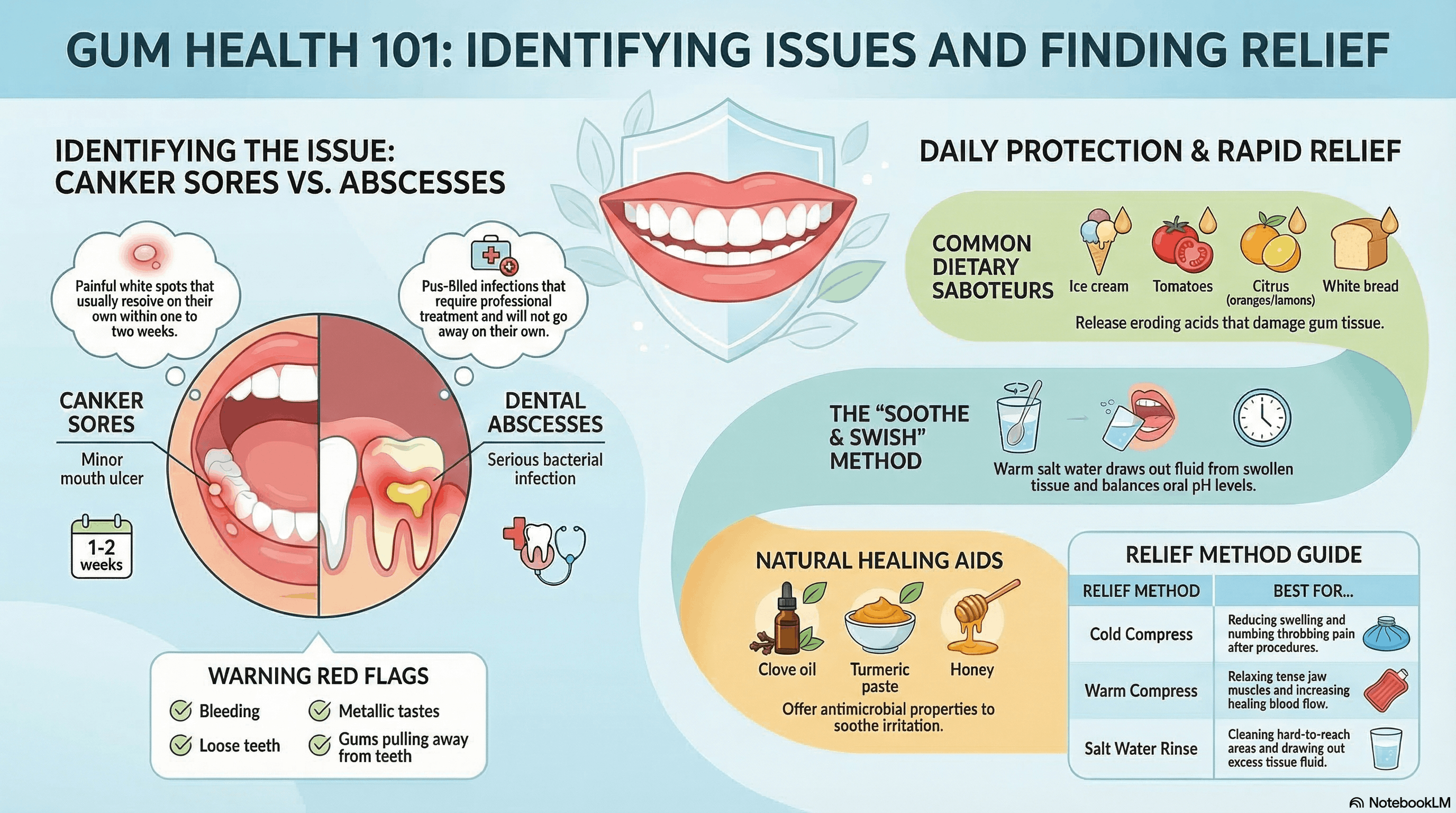
They may:
- Check for plaque and tartar buildup
- Look for signs of gingivitis or periodontitis
- Check whether food is trapped between teeth
- Examine for a cracked tooth or cavity
- Look for abscess, ulcer, or infection
- Recommend a cleaning
- Suggest a medicated rinse or treatment plan
- Review your brushing and flossing technique
Sometimes the fix is simple.
Sometimes the visit helps catch a problem before it becomes expensive, painful, or harder to treat.
That is a win either way.
How to help prevent sore gums from coming back
Relief is good.
Prevention is better.
Here are the habits that make a real difference.
Brush twice a day with a soft brush
Not hard. Not fast. Just thorough and gentle.
Clean between your teeth daily
Floss or use another dentist-recommended interdental cleaner.
This is where a lot of gum irritation begins.
Get regular dental checkups and cleanings
Professional cleanings remove tartar you cannot remove at home.
This matters more than many people realize.
Drink more water
A hydrated mouth is a healthier mouth.
Avoid tobacco
Smoking and vaping can make gum problems worse and healing slower.
Pay attention early
A little bleeding, soreness, or swelling is easier to deal with early than late.
A note for families looking for affordable care
Some people delay treatment because they worry about cost.
That is understandable.
If that is you, it may help to look into options like searching for CDCP dentists near me if you are exploring coverage possibilities under the Canadian Dental Care Plan.
Access to preventive care matters. A simple exam now may help you avoid a much bigger treatment later.
And if you are already looking into trusted local care, many families searching for Smilemakers Canada are really looking for a clinic experience that feels friendly, clear, and reassuring from the first visit.
That peace of mind matters too.
The bottom line
If you have been searching how to relieve sore gum, start with the basics.
Rinse with warm salt water. Brush gently. Floss carefully. Avoid irritating foods. Stay hydrated. Give minor irritation a little time.
But do not ignore symptoms that keep showing up.
Sore gums that bleed, swell, throb, smell bad, hurt when chewing, or do not improve may be your sign to get professional help.
Your mouth is good at sending signals.
The smart move is to listen early.
If your gums are sore and you want answers instead of guesswork, book a dental checkup with SmileMakers in Brampton, ON. The team can help find the cause, calm the discomfort, and make sure a small issue does not turn into a bigger one.